Janelle Monáe
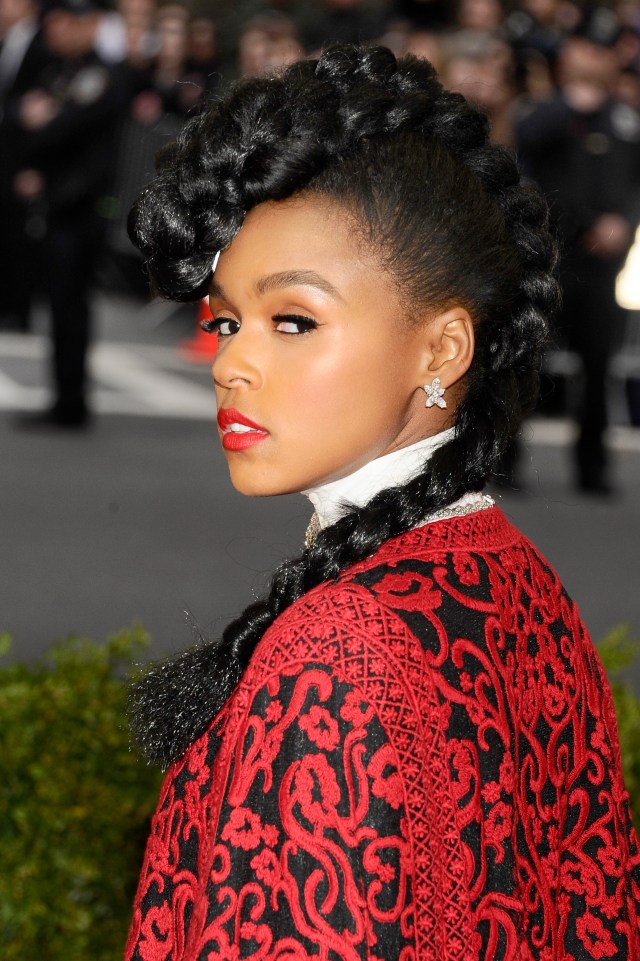
Thirty-three-year-old Janelle Monáe is a famous, Black, queer, multi-media artist. She is an actor, singer, song-writer, and producer who has spearheaded and appeared in many influential projects over the years. As an actress she has appeared in Oscar nominated films such as, Moonlight (2016), and Hidden Figures (2017), both projects that showcase underrepresented or forgotten narratives of the Black community to wider audiences (Félix). As a musician, Monáe uses afrofuturism as a theme to envision a future where Black lives are centralized, in order to combat the ways in which they have been erased in the past. Moreover, she is an artist dedicated to making music for underrepresented groups such as, communities of color, the LGBTQ+ community, and women. Over the past decade, Monáe has released one EP and three science fiction concept albums, the release of each album has acted as a continuation from the prior release, so when combined, all of the albums detail one widely extensive story. Monáe’s science fiction saga began in 2007 with her experimental science fiction concept EP, Metropolis. The EP was massively successful, and Monáe even received a Grammy nomination for one of the EP’s tracks, “Many Moons” (Spanos). Since then, Monáe has released three additional albums within the same saga, The ArchAndroid (2010), The Electric Lady (2013), and Dirty Computer (2018). As the series builds, Monáe’s world grows more detailed and fascinating, but to understand how the world she created began, we must start at the beginning with, Metropolis.
Metropolis: What’s the Story?
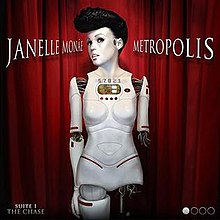
As previously mentioned in the section, “Soft Sounds: What’s the Story?” on the Soft Sounds from Another Planet page of this blog, Monáe utilizes the tool of narrative to tell a science fiction story throughout her albums more so than Japanese Breakfast does. The overarching storyline, and the futuristic dystopian world, she has created is what mainly ties all of her songs together. Each song holds a piece of the story in it, and to understand the entirety of the story, the albums in their completion must each be listened to. In Metropolis, we follow the story of android #5782, Cyndi Mayweather, who is being pursued by bounty hunters for disassembly because she fell in love with a human, Anthony Greendown. This storyline is propelled by each of the songs on the EP, and overall this album sets the tone for Monáe’s following three albums which happen in the same universe and follow the same storyline.
A Look at Lyrics Pt. 1: “The March of the Wolfmasters”
The March of the Wolfmasters
Good morning, cy-boys and cyber girls! I am happy to announce that we have a star-crossed winner in today’s heartbreak sweepstakes: Android Number 57821, otherwise known as Cindi Mayweather, has fallen desperately in love with a human named Anthony Greendown. And you know the rules! She is now scheduled for immediate disassembly.
Bounty hunters, you can find her in the Neon Valley Street District on the 4th floor at the Leopard Plaza Apartment Complex. The Droid Control Marshals are full of fun rules today. No phasers, only chainsaws and electro-daggers! Remember, only card-carrying hunters can join our chase today. And as usual, there will be no reward until her cyber-soul is turned into the Star Commission.
Happy hunting!
“March of the Wolfmaster,” is the first song on the album and is a great intersection of narrative and lyricism. Here, “March of the Wolfmaster,” is a free-verse song, because rather than a musical piece, it is more of an announcement. In reading the lyrics or listening to the song, listeners are pulled into Monáe’s world immediately because they are informed of a dire situation. The information presented through this song is critical because it explains the dilemma that the rest of the songs build off of, that android #5782, Cindi Mayweather is to be found and disassembled because of her romance with human, Anthony Greendown. Additionally, this song is impactful because it is not from the perspective of Mayweather. The various perspectives that Monáe writes songs from in her albums is one of her greatest wording techniques in that she can create a more detailed and complex world by including songs from multiple characters in her world.
A Look at Lyrics Pt. 2: “Violet Stars Happy Hunting!”
Violet Stars Happy Hunting
[Verse 1]
I'm an alien from outer space (outer space)
I'm a cybergirl without a face a heart or a mind
(I'm a product of the metal, I'm a product of metal, I'm a product of the man)
See, see, see, see, see
I'm a slave girl without a race (without a race)
On the run cause they're here to erase and chase out my kind
They've come to destroy me (they've come to destroy me)
And I think to myself

[Hook]
Impossibly, wait it's impossible
They're gunning for me (that they're gunning for you)
And now the army's after you
(And now they're after you)
For lovin' too
Uh huh and all the sirens go doo doo
Sirens go doo doo, doo doo, doo doo
Doo roo roo roo roo roo roo roo
Ohh baby ooh you know the rules
(I love you and I won't take 'no' for an answer)

[Verse 2]
They say that Violet Stars will set you free (set you free)
When you're running lost and alone
Following them down up Neon Valley Street (up Neon Valley Street)
A pretty day makes a pretty picture
But fall in love and they're coming to get ya
Who knew 10 men with guns were at the door (at the door)
The Droid Control (THE DROID CONTROL)

[Hook]
Impossibly, wait it's impossible
They're gunning for me (that they're gunning for you)
And now the army's after you
(And now they're after you)
For lovin' too
Baby I hear the sirens go doo doo
Sirens go doo doo, doo doo, doo doo
Doo roo roo roo roo roo roo roo
Come on baby, cause here they come
You know the rules

[Whispering Interlude]
Sounds of escape and (The Chase)
Look this way…Here she go, here she go
I see it…go this way, go this way, go this way… out the window. Out the window!
Don't let her get out the window!

[Welcoming Announcement]
Alll my cyboys and cybergirls!
Get Up if you gon' get Down!
Citizens, pull your pants UP
And cyborgs pull your pants Down!
Down yo' ankles and show yo' rust
Shake yo' chain - you know it's a must!
I know a Cindi Mayweather: get on up here and just…
Baby, lemme just see ya squeak!

[Last Hook] + [Overlay]
I said I love my baby so! (Impossibly, they're gunning for me)
I said I love my baby so! (and now the Pawn is after you)
And he loves me too! (for loving, too)
He loves me too! Loves me too!
(Sirens go doo doo doo…)
I said OHH! (You know the rules) I said OHH! Oh, baby!
(Impossibly, they're gunning for me, and now the army's is after you… for loving, too)
(Sirens go doo doo doo…)

Oh, oh, oh, OWW!
Y'all better shut up!
In the EP’s second track, “Violet Stars Happy Hunting!” we witness a change in perspective from the first song, “The March of the Wolfmasters.” In the first song, audiences listen to a third party announcement, but in the second song, “Violet Stars Happy Hunting!” audiences get to experience the first song from Mayweather’s perspective. This is especially effective in continuing the narrative of the story because listeners just learned that Mayweather is going to be chased by bounty hunters, therefore this song acts an introduction to Mayweather and her response to her impending chase. The first verse lets listeners know whose point of view the song is from when Mayweather sings, “I’m an alien from outerspace/I’m a cybergirl without a face or a mind.” Throughout the following hook and the second verse, we hear Mayweather describe her impending doom and what she imagines it will look like. Despite the horrors she will likely face if caught, in the last hook, Mayweather exclaims repeatedly, “I said I love my baby so!” because even though she is being sought after by people who want to hurt her, her love for Greendown still overwhelmingly persists. Moreover, while this song propels the narrative of Monáe’s story, it also provides a parallel to how people react in our society to relationships that may be perceived as untraditional. People are not always receptive to relationships between: interracial couples, LGBTQ couples, or couples with large age gaps. Over time, people have tried to prevent these sorts of relationships, just as the world Mayweather is in tries to prevent her relationship with a human, through shame in the media and government policies.
Metropolis: The Music & Genre
Whereas Japanese Breakfast used an experimental blend of shoegaze and dream pop to create the dreamy atmosphere of her softer planet, Monáe does not confine herself to one genre. In this album, there is an experimental blend of genres including, neo-soul, funk, hip-hop, R&B, electronic, musical theatre, and rock (Spanos). Monáe seems to pull aspects from each genre and blend them to create a sound that is new and unique, and helps her craft a more precise and detailed world.
What’s that Sound Called? Pt. 1: “Many Moons”
Because the EP was released in 2007, little high quality live performances of its songs are available online. However, this is the only song on the EP with a music video which is featured above.
The third track on the EP, “Many Moons,” was the first single off of Metropolis, and the first song to win Monáe a Grammy nomination. The fact that the song reached such high acclaim is not a surprise once you listen to it. Wildly dynamic, the song begins with fast-paced drumming and the high pitched playing of a keyboard. Monáe’s voice enters riffing at a steady pace, but soon its Monáe’s vocals that become the central focus of the song. Monáe’s voice is a shapeshifter, transforming from a voice deep and rich in resonance, to high pitched character voices, growling vocals that come from the chest, to mono-tone spoken word. While Monáe’s vocals change rapidly over the course of the song, the music becomes less of a focus, until suddenly the consistent beat of the drums that accompany her spoken word shift and an incredible electric guitar solo emerges and finishes off the song. While none of these musical aspects in of themselves are inherently science fiction, what they come together to create is as incredibly new and original as the futuristic world Monáe invites to experience is.
What’s that Sound Called? Pt. 2: Cybertronic Purgatory
The fourth song on the album, “Cybertronic Purgatory,” explores Mayweather’s uncertainty as for what lays ahead for her and her love, Anthony Greendown. Yet, even as she does not know what the future holds, what she is certain of is her love for him. This song is incredibly unique and unlike every other song on the album, because of its music production. Ultimately, “Cybertronic Purgatory,” is a shortened futuristic aria, an aria is typically a longer solo song featured in an opera. The light strumming of the guitar in accompaniment to Monáe’s voice, this time in the style of classical voice, but autotuned, aids in establishing the atmosphere of uncertainty. Ultimately, this song is truly a work of science fiction as Monáe recreates a song that is fundamental in the realm of classical voice by putting her own twists on it.
Course Parallels Pt. 1: Cindi Mayweather and Anthony Greendown, and Marko and Alana from Saga: Volume 1
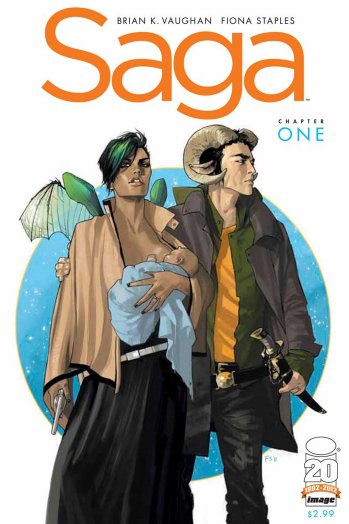
Monáe’s album, Metropolis, follows the story of star-crossed lovers, Cindi Mayweather and Anthony Greendown who are forbidden to be together because Mayweather is an android and Greendown is a human. Similarly, in the comic book, Saga, we followed the story of interspecies couple, Marko and Alana, who, just like Mayweather, are sought after by bounty hunters for engaging in an interspecies relationship and having a baby. As aforementioned in the subsection, “A Look at Lyrics Pt. 1,” on “Violet Stars Happy Hunting,” this example of two different species, in both Metropolis, and Saga, display how difficult people have made it for partners who are different from one another to peacefully be in a relationship with one another. The representation of interspecies couples calls attention to how people experience discriminatory fears and anxieties when conventional norms are dismissed.
Course Parallels Pt. 2: Afrofuturism, Kindred, & Metropolis

In the first unit of our course, we did a unit on Black Lives Matter, and explored how many feminist creatives utilize Afrofuturism to imagine a future where black lives are the center of the story. Afrofuturism can be used in this futuristic manner, or to re-write histories where black lives were erased. Additionally, this is a technique evident in Janelle Monáe’s suite of albums as she draws parallels between her dystopian future and the world we live in today. Monáe displays to us that, unfortunately, the two are not so different. This is exemplified in the third song on the EP, “Many Moons,” and the final song, “Sincerely, Jane,” where she calls out the violence against black lives, the continued presence of Jim Crow, and slavery today. Monáe uses androids in her music to represent black lives, and therefore draws parallels between their shared experiences of discrimination. This semester, we read the novel Kindred, by highly influential science fiction author, Octavia Butler, which details the story of a black woman, Dana, who is unwillingly transported back into the time of slavery. Both Monáe in her music, and Butler in Kindred display this idea of non-linear time, in that the time slavery is still present today, despite the fact that it legally ended years ago.
 Feminist Sci-Fi Sounds